

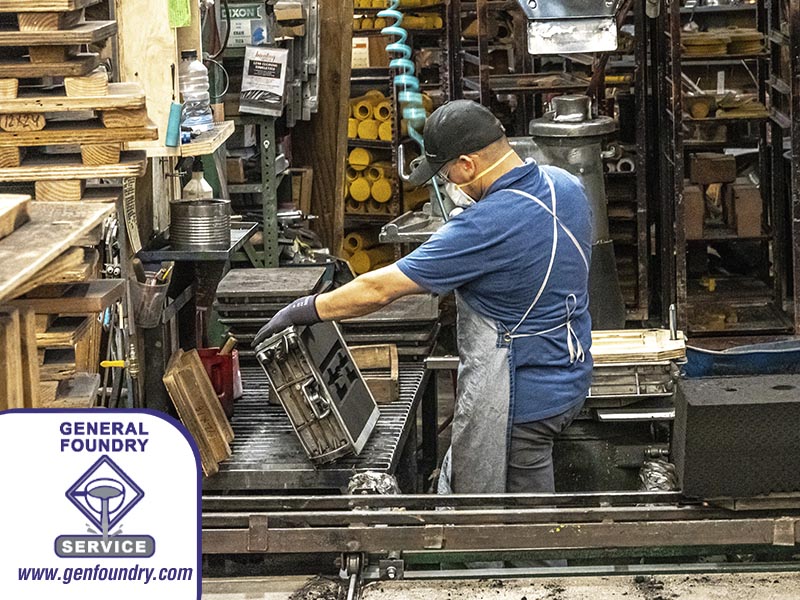
Sand casting continues to be a foundational process in the production of aluminum and zinc-aluminum components, not only because of its cost-efficiency and adaptability but also due to its long-standing role in supporting low-to-medium production volumes and a wide range of part geometries. For engineers, understanding sand casting from a process standpoint is critical. Each casting is the result of numerous technical steps, material considerations, and process controls that collectively determine the outcome. Behind the apparent simplicity of pouring molten metal into a mold lies a series of challenges that must be managed carefully: mold preparation, sand quality, binder selection, gating and riser design, cooling rates, and finishing operations. These details directly influence dimensional accuracy, surface finish, and structural integrity. By gaining deeper insight into what actually occurs at each stage, engineers can make more informed design choices, specify processes with greater precision, and anticipate the limitations that may affect performance and long-term reliability.
Porosity in Aluminum Sand Castings
Porosity is among the most pervasive problems in sand-cast aluminum components. It can manifest as gas porosity, shrinkage porosity, or micro-voids distributed throughout the part. Gas porosity is typically introduced by hydrogen absorption during melting or by turbulence during pouring, while shrinkage porosity results from insufficient feeding during solidification.
From a mechanical standpoint, porosity can reduce tensile strength, fatigue resistance, and leak-tightness, particularly in pressure-retaining or high-stress applications. Non-uniform porosity can also disrupt subsequent heat treatment and machining processes.
Possible Mitigation Strategies:
- Optimize mold gating and runner systems using simulation software (e.g., MAGMASOFT, FLOW-3D) to reduce turbulence and promote laminar flow.
- Employ rotary degassing and fluxing to remove hydrogen from molten aluminum.
- Use filters in the gating system to capture inclusions and dross before the metal enters the mold cavity.
- Vacuum-assisted or low-pressure casting methods must be applied in critical applications where gas entrapment must be minimized.
- Conduct X-ray or CT scanning during inspection to identify and quantify porosity for process feedback.
Surface Finish and Dimensional Stability
The inherent roughness of sand mold surfaces contributes to the coarse surface finish of cast parts. While acceptable for non-critical surfaces, this roughness often requires additional machining or finishing steps, particularly when parts must interface with seals, bearings, or other mating components.
Dimensional variation can arise due to thermal expansion of patterns, sand mold deformation, inconsistent cooling rates, and tool wear over long runs. This variability complicates the control of geometric tolerances and often requires liberal dimensional allowances that increase material waste and post-processing effort.
Possible Mitigation Strategies:
- Select finer sand grain sizes or resin-coated sands for improved surface finish where required.
- Utilize metal patterns or CNC-machined matchplates to improve pattern accuracy and reduce thermal distortion.
- Implement rigorous dimensional control plans including Statistical Process Control (SPC) and Coordinate Measuring Machine (CMM) validation for critical-to-function dimensions.
- Define machining stock allowances and tolerance stacks during design, ensuring a consistent fit with mating components.
Hot Tearing and Shrinkage Defects
Hot tearing is a metallurgical defect that results from tensile stresses acting on a casting while it is still partially solid. This is particularly common in aluminum-silicon alloys with wide solidification ranges or parts with abrupt cross-sectional transitions. Shrinkage cavities occur when insufficient feed metal is available during solidification, often due to poor riser design or uncontrolled cooling rates.
Both defects compromise mechanical performance, especially under dynamic loading, and may not always be visible without destructive testing or radiography.
Possible Mitigation Strategies:
- Apply directional solidification principles using chills, insulating sleeves, and properly placed risers to guide the solidification front toward the feeders.
- Design for uniform wall thickness where possible, or use generous fillets and radii at transitions to minimize stress concentrations.
- Analyze solidification behavior through thermal simulations to predict shrinkage hotspots and preemptively adjust mold geometry.
- Choose alloys with narrower freezing ranges or modify the composition to improve hot tear resistance when the geometry is not negotiable.
- Implement thermal management procedures during pouring and cooling, especially for thick-section castings where residual stresses can build unevenly.
Zinc-Aluminum Alloy Specific Issues
Zinc-aluminum alloys, such as ZA-8, are prized for their strength, wear resistance, and excellent castability. However, their relatively low melting points and high reactivity introduce process sensitivities that are not as pronounced in aluminum-only alloys.
Dross formation due to rapid oxidation can trap non-metallic inclusions in the casting. At the same time, thermal cracking may occur if the casting experiences sudden temperature gradients, particularly during mold filling or post-cast handling.
Possible Mitigation Strategies:
- Keep melt temperatures within recommended limits (typically 420°C to 460°C for ZA alloys) and avoid overheating, accelerating oxidation and dross buildup.
- Use inert gas blanketing or cover fluxes to prevent oxidation during melting and holding.
- Design gating systems to minimize turbulence and flow separation, which increases oxide formation.
- Utilize insulating or temperature-controlled molds to reduce thermal shock and stress.
- Avoid over-chilling the mold, which can lead to premature skin formation and flow interruption, especially in thin-walled geometries.
Inconsistent Mechanical Properties Due to Alloy Variation
Sand casting operations often rely on a mix of primary and secondary (recycled) material. Without rigorous process control, the use of reclaimed alloys can introduce variations in composition, grain structure, and impurity content, all of which contribute to inconsistent mechanical performance.
This variability presents a significant concern for applications requiring consistent strength, elongation, or wear resistance, especially in aerospace, defense, and safety-critical automotive components.
Possible Mitigation Strategies:
- Institute material certification protocols for all incoming ingots and scrap to ensure consistent alloying elements and impurity levels.
- Implement melt analysis using optical emission spectroscopy (OES) or X-ray fluorescence (XRF) to verify chemical composition before pouring.
- Maintain traceability for each heat or batch to link process conditions with performance data.
- When necessary, refine or modify alloys through master alloy additions or fluxing treatments to correct deviations.
- Use 100% virgin alloy for high-reliability applications and establish tight lot control and statistical sampling protocols during quality assurance.
As industries continue to demand lighter, stronger, and more complex components, the future of sand casting will depend on how effectively engineers and manufacturers adapt and innovate. Emerging technologies such as digital twin modeling, additive manufacturing for mold and core production, and real-time process monitoring are already expanding what is possible. These tools improve accuracy and repeatability and reshape the way engineers think about casting design from the earliest stages. By engaging with these advancements, engineers can help drive the evolution of sand casting from a traditional process into a highly engineered, data-driven discipline capable of meeting the next generation of performance standards.
Aluminum and zinc-aluminum sand castings can deliver high value and reliable performance, but only when the process behind them is carefully engineered and controlled. The ultimate quality of a casting is not determined at the pouring stage alone; it is the outcome of dozens of decisions made earlier in the workflow, from mold design to material preparation to process monitoring. When engineers account for porosity, shrinkage tendencies, dimensional variability, and alloy behavior during the design and specification stages, they establish the conditions for a casting that will meet both mechanical and dimensional expectations. This level of foresight also reduces costly rework, improves consistency, and enhances throughput across the production line.
Today’s casting environments increasingly rely on advanced tools and methods to make this possible. Process simulation provides insight into metal flow and solidification before production even begins. In-process inspection and testing ensure that defects are caught early, and materials science practices guide alloy and sand system choices for improved consistency. For engineers, recognizing the role of these technologies is essential. By understanding how they are applied behind the scenes, engineers can specify not just a component, but a process that balances cost-efficiency with the precision and reliability required in high-performance applications.
How can General Foundry Service help you?
With over 80 years of casting experience in various critical industries, General Foundry provides you with “get it right the first time” quality and a genuinely customer-focused approach to each project. We offer best-in-class turnkey solutions with multiple processes and alloy options to meet your component casting needs. Contact us today for more information or to get started on your next project.