
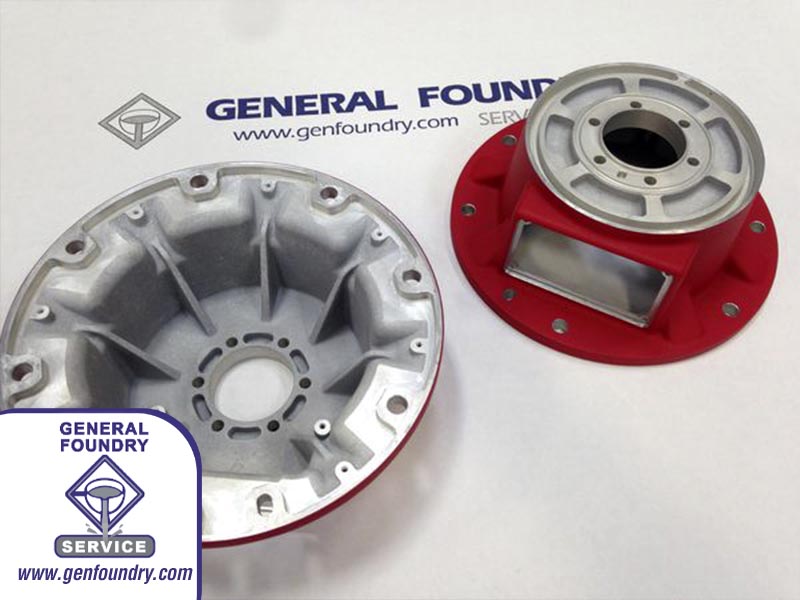
As the robotics and electromechanical systems industries continue to evolve, manufacturers face increasing pressure to produce components that meet complex performance requirements while staying within budget and production timelines. These systems, integral to automation across sectors such as manufacturing, logistics, defense, medical devices, and consumer electronics, rely on parts that must be structurally robust, lightweight, dimensionally accurate, and reliable under repetitive motion and stress. Metal casting has become a preferred solution for many engineers and product developers in this space, particularly for low to intermediate volume production.
Metal casting offers distinct advantages compared to machining, fabrication, or additive manufacturing, especially when the project calls for geometrically complex shapes or involves materials that are difficult to machine. With metal casting, engineers can consolidate multiple parts into a single net-shape or near-net-shape component, reducing the need for additional welding or assembly. This not only saves time but also improves part strength and performance consistency.
Weight, precision, and mechanical performance are tightly interlinked for robotics and electromechanical applications. Components such as robotic arms, actuator housings, turrets, and chassis bases must often be both lightweight and structurally sound. Metal casting allows for exact control over wall thickness, enabling manufacturers to reduce material use in non-critical areas while reinforcing stress-bearing regions. This level of customization is essential when balancing payload requirements, movement speed, and system stability.
Meeting the Challenges of Low to Intermediate Volume Production
Robotics developers often operate in fast-moving, iterative design environments. They need flexible production methods that support frequent design updates without the financial burden of high tooling or setup costs. Metal casting, particularly using investment or permanent mold casting processes, is well-suited for this production scale. Tooling can be relatively low-cost compared to high-volume alternatives, and lead times can be optimized through digital prototyping and rapid pattern production.
In addition, many electromechanical system manufacturers require a range of part sizes and performance characteristics across a single assembly. Casting accommodates this variability well. High-strength alloys (such as aluminum) can be tailored to suit specific application needs, from thermal conductivity in electronic housings to impact resistance in structural support elements. Engineers can specify different alloys and casting techniques within a single system, ensuring that each component meets its individual performance criteria without over-engineering or overspending.
Robotics and electromechanical systems’ design, testing, and commercialization are typically multi-phase and cost-sensitive. Metal casting helps solve several recurring challenges in this lifecycle:
- Prototyping to Production Transition: Cast parts can be prototyped quickly using 3D-printed patterns or soft tooling, then transitioned into production using the same design geometry, reducing rework and design delays.
- Design Complexity and Integration: Intricate internal features such as cooling channels, mounting bosses, or internal cavities can be incorporated directly into castings, eliminating the need for post-machining or complex assemblies.
- Assembly and Fit: Precision casting minimizes dimensional variation, reducing fit-up issues during assembly. Ready-to-assemble castings also decrease reliance on secondary machining and reduce labor time.
- Material Optimization: Engineers can choose from a wide selection of alloys with known mechanical and environmental properties, enabling part designs that match performance demands while maintaining cost control.
In a competitive field where performance, agility, and innovation determine market success, the ability to source custom-cast components that meet exact requirements, without the limitations of traditional manufacturing, can be a decisive advantage. Metal casting empowers robotics and electromechanical system manufacturers to think beyond the constraints of conventional design and build processes.
By leveraging the proper casting process and alloy combinations, product developers gain access to components that perform under pressure, deliver long service life, and contribute to the overall efficiency and competitiveness of the system. For many engineers and procurement teams, casting is not merely a production choice but a strategic tool supporting long-term product development goals.
How can General Foundry Service help you?
With over 80 years of casting experience in various critical industries, General Foundry provides you with “get it right the first time” quality and a genuine customer-focused approach to each project. We offer best-in-class turnkey solutions with multiple processes and alloy options to meet your component needs. Contact us today for more information or to get started on your next project.