

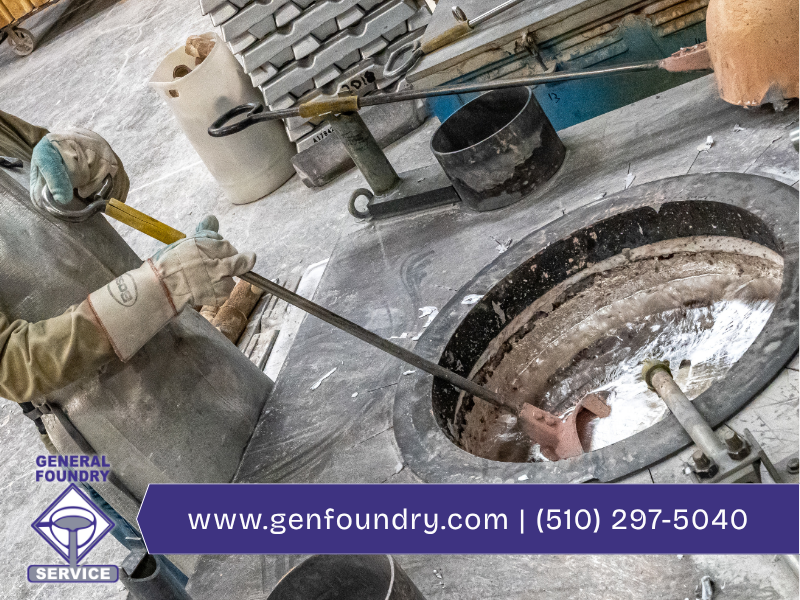
Aluminum and zinc-aluminum alloys are indispensable across diverse industries due to their exceptional properties that significantly enhance the performance and efficiency of a wide range of casting applications. The versatility of these alloys stems from their unique mechanical and physical characteristics, including lightweight nature, excellent corrosion resistance, and strength-to-weight ratios. These attributes enable engineers and manufacturers to produce components that are not only durable but also capable of enduring challenging environments and mechanical stress. Here, we explore the specific characteristics of aluminum and zinc-aluminum alloys, their distinct advantages and suitability for multiple casting techniques, including green sand, air-set (no bake) sand, permanent mold, rubber-plaster mold, and investment casting.
Aluminum Alloys
Aluminum alloys used in casting are categorized based on their specific chemical compositions and properties. Their effectiveness stems from a variety of alloying elements and the resulting characteristics.
- Composition: Common alloying elements such as copper, silicon, magnesium, and manganese play critical roles. For instance, silicon is vital for enhancing fluidity during the casting process and improving wear resistance.
- Mechanical Strength and Ductility: Aluminum’s excellent strength-to-weight ratio makes it ideal for applications requiring lightweight yet durable materials. Cast aluminum alloys offer impressive tensile strength, enabling complex, intricate designs without compromising structural integrity.
- Corrosion Resistance: A natural oxide layer forms on aluminum surfaces, providing substantial corrosion resistance. This quality is vital for components required to withstand harsh environments, ensuring longevity and reliability in applications.
- Thermal and Electrical Conductivity: Due to its high thermal conductivity, aluminum is effective at transferring heat, which is valuable for components such as heat exchangers. Additionally, its electrical conductivity makes it suitable for electronic applications.
Zinc-Aluminum Alloys
Zinc-aluminum alloys bridge the gap between zinc and aluminum, offering a range of advantages that enhance their utility in casting applications.
- Superior Mechanical Properties: ZA alloys exhibit high strength and ductility, making them ideal for components that endure significant stress. This characteristic ensures reliability in critical applications, such as automotive and industrial machinery.
- Enhanced Wear Resistance: The combination of zinc and aluminum results in improved wear resistance compared to standard aluminum alloys. This property is significant for components that experience friction and abrasion, such as gears and housings.
- Optimized Fluidity: The unique composition of zinc-aluminum alloys enhances their fluidity during casting, enabling intricate designs with fewer defects. This improved castability provides significant benefits in achieving complex geometries.
- Corrosion Resistance: Like aluminum, zinc-aluminum alloys exhibit exceptional resistance to corrosion. This property extends the lifespan of components exposed to moisture and chemicals, making them suitable for a range of applications.
Applications in Casting Techniques
Understanding the characteristics of aluminum and zinc-aluminum alloys enables their practical application across various casting methods, significantly influencing the mechanical properties and overall quality of the final products. For instance, the excellent fluidity of these alloys allows for complete mold filling, thereby reducing the occurrence of defects such as porosity and inclusions. In applications such as green sand casting, aluminum alloys’ lightweight nature makes them easy to handle and manipulate. In permanent mold casting, the thermal conductivity helps minimize cooling times and enhance dimensional accuracy. The advanced characteristics of zinc-aluminum alloys further improve the effectiveness of rubber-plaster mold and investment casting techniques, enabling intricate designs to be accurately replicated with improved wear resistance. The specific alloy composition can also be tailored to meet the distinct demands of different casting processes, optimizing attributes like strength, durability, and surface finish.
- Aluminum alloys are commonly used due to their lightweight, reliable properties. Zinc-aluminum alloys enhance castability, enabling the formation of complex shapes with minimal defects.
- The excellent thermal conductivity of aluminum alloys optimizes cooling rates and solidification times. In contrast, zinc-aluminum alloys deliver improved wear resistance, making them ideal for demanding applications.
- Complex details can be accurately translated using both aluminum and zinc-aluminum alloys, thanks to their enhanced fluidity.
- Aluminum alloys excel at creating precise, intricate designs, while zinc-aluminum alloys contribute their strength and wear resistance to enhance overall performance.
Aluminum or Zinc Aluminum alloys can be made into casting using the following processes: Green Sand, Air-Set (No Bake) Sand, Permanent Mold, Rubber Plaster Molding (RPM) Casting, and Investment (Solid Mold) Casting.
Types of Aluminum and Zinc-Aluminum Alloys Typically Utilized
There are several aluminum alloys utilized in these casting processes, each selected for their unique properties that best suit the intended application. The most common alloys include:
Aluminum Alloy 356
- Composition: Contains Silicon (6.5-7.5%) and Magnesium (0.3-0.5%).
- Known for its excellent castability, good combination of properties and pressure tightness.
Aluminum Alloy 357
- Composition: Contains Silicon (6.5-7.5%) and Magnesium (0.45-0.7%).
- Known for the highest combination of properties, excellent castability, and pressure tightness.
Aluminum Alloy 535
- Composition: Contains Silicon (0.1%) and Magnesium (6.6-7.5%).
- Known for its excellent corrosion resistance, high strength, and better for anodizing.
Zinc-Aluminum Alloy ZA-8
- Composition: Contains approximately 8% aluminum and zinc as the balance.
- Utilized in high-strength applications. This alloy is particularly useful for producing thin-walled components due to its good strength, hardness, and fluidity. It is also suitable for decorative items and parts requiring excellent plating and finishing characteristics. This alloy is 2.3 times more dense than 356, 357, or 535 alloys, making it a great alloy for heavier parts if lowering the center of gravity in an assembly is important.
Aluminum and Zinc-Aluminum Alloys at a Glance
|
Property/Characteristic |
Aluminum Alloys |
Zinc-Aluminum Alloys |
|
Weight |
Lightweight, making it ideal for portable applications |
Approximately 2.25 times heavier than aluminum alloys. Good as a replacement for steel or iron components |
|
Mechanical Strength |
High strength-to-weight ratio, suitable for various stresses |
High strength and ductility, excellent for high-stress applications |
|
Corrosion Resistance |
Excellent due to natural oxide layer |
Great corrosion resistance, suitable for harsh environments |
|
Fluidity |
Good fluidity; varies by alloy type |
Excellent fluidity, particularly beneficial for intricate designs |
|
Thermal Conductivity |
High, allowing for effective heat dissipation |
Moderate, but still useful in thermal applications |
|
Wear Resistance |
Good, but not ideal for high-abrasion applications |
Superior wear resistance compared to standard aluminum |
|
Casting Techniques |
Versatile across sand, permanent mold, rubber-plaster mold, and investment casting |
Versatile across sand, rubber-plaster mold, and investment casting |
|
Common Alloys |
356, 357, 535 |
ZA-8 |
The selection of aluminum and zinc-aluminum alloys is essential for optimizing the quality and performance of cast components in varied applications. By leveraging their unique properties, these alloys allow for tailored solutions that meet the specific demands of various industries and applications.
How can General Foundry Service help you?
With over 80 years of casting experience in various critical industries, General Foundry provides you with “get it right the first time” quality and a genuine customer-focused approach to each project. We offer best-in-class turnkey solutions with multiple processes and alloy options to meet your component needs. Contact us today for more information or to get started on your next project.